From first click to daily habit · 1994–2001
Browsing was a new skill
A browser window feels almost self-explanatory today. In the 1990s, nothing about it was obvious. What was an address? Why did underlined text turn blue? Could a wrong click break something? And was “the internet” the same thing as the home page that appeared after dialling in?
The Netherlands did not learn the Web from one course or through one browser. The skill spread through manuals, colleagues, children, libraries and curious visitors sitting together at a computer. Technology became culture: back, favourites and double-clicking entered everyday language.
First the connection, then the browser
At home, browsing usually began before the browser opened. A provider pack contained a CD-ROM or floppy disk, an account name, a telephone number and often a printed step-by-step guide. Setup software configured the modem, created a dial-up connection and might install a browser, email program and selected home page.
Which components would you like to install?
Free CSS reconstruction — not a screen from a particular provider.
This guidance lowered the threshold, but also shaped the first experience. The provider determined which software was visible, which favourites were preloaded and which portal served as the front door. Browser, provider and internet therefore blended together for many beginners.
Read how Dutch households became internet customers →The Digital City gave the network streets and squares
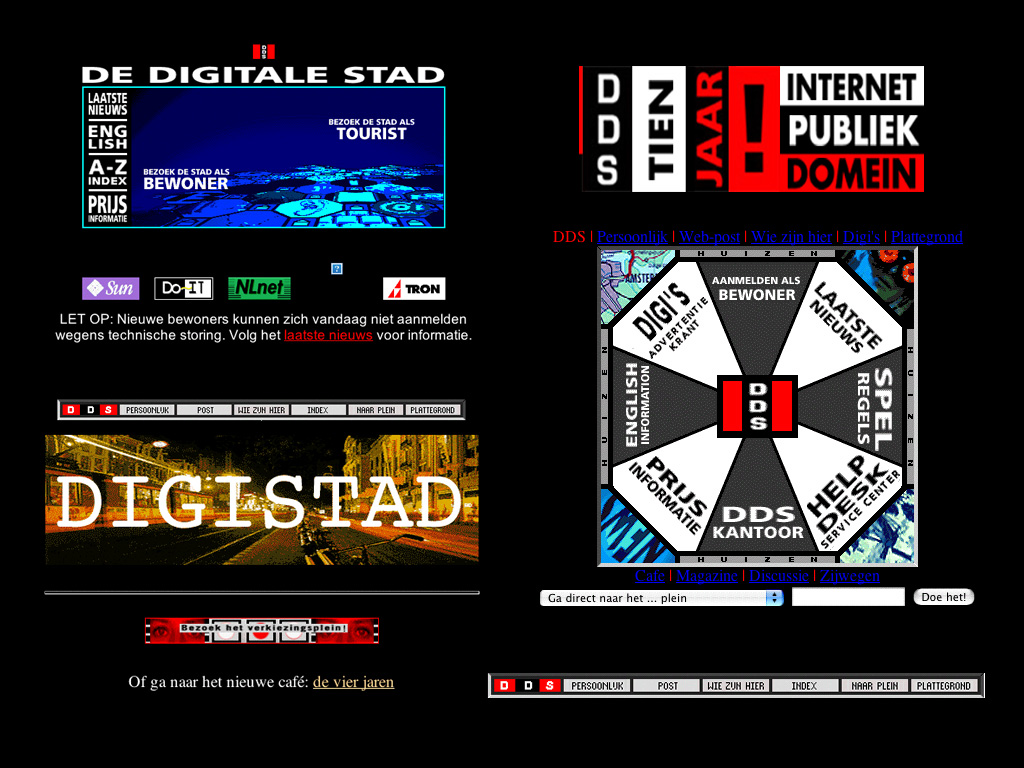
De Digitale Stad (DDS, the Digital City) opened on 15 January 1994. The Amsterdam experiment gave citizens free access to information, discussion and email. People without a modem or computer at home could use public terminals. Terms such as square, café, post office and resident made the network recognisable without first explaining its technical architecture.
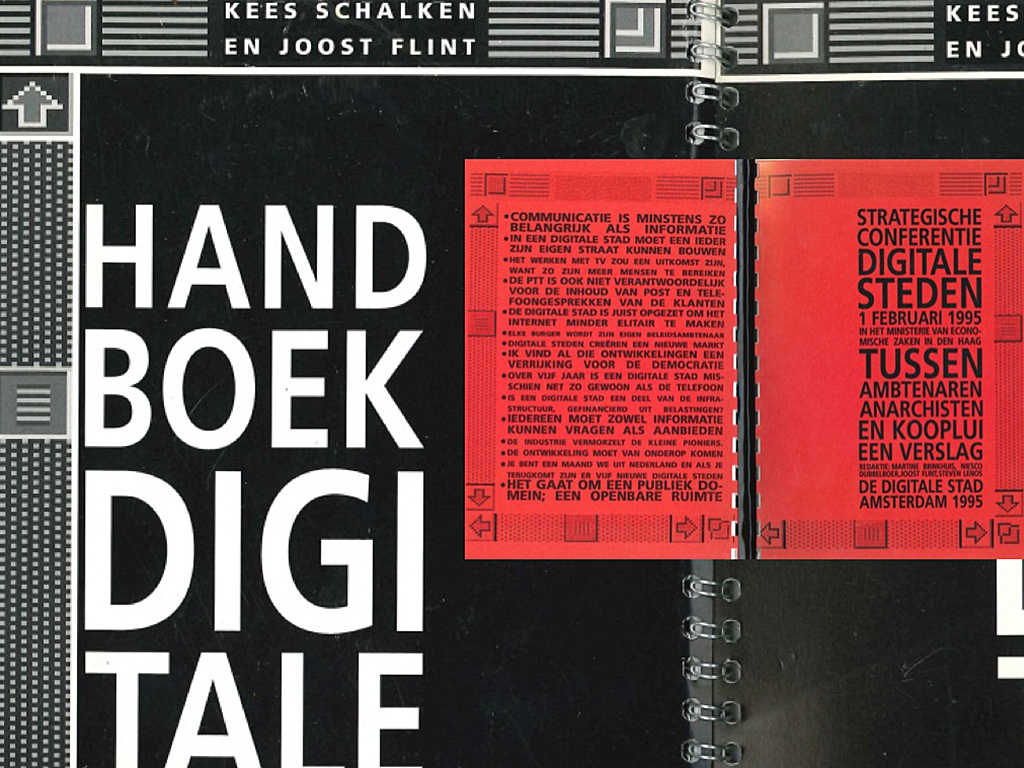
The city metaphor was a form of teaching. You did not need to know what a server or protocol was to understand that you visited the square for news, a café for conversation and the post office for messages. The KB therefore describes DDS not only as the Netherlands’ first online community, but also as a project intended to introduce people to the internet.
The guide lay beside the keyboard
Print taught the Web to the Netherlands. Computer magazines explained terms, printed long addresses and bundled trial software on CD-ROMs. Newspapers and television guides began listing URLs. A typing mistake meant an empty page, so a useful address was carefully copied or immediately saved as a favourite.
From modem tone to the first browser window, step by step.
New terms, websites and software explained with screenshots.
A colleague, child or neighbour pointed out the back button and address bar.
A school, library or internet café offered access without a home connection.
The CD-ROM belonged to this learning culture. It could carry browsers, utilities and an offline demonstration, allowing people to practise before the first telephone charge. The KB preserves about 35,000 CDs, DVDs and CD-ROMs, mainly from 1980–2000: physical traces of a period when digital knowledge often arrived on a disc.
Where were you supposed to go?
A working browser did not solve the beginner’s biggest problem: where did the Web begin? Provider portals offered news and categories. Ilse searched Dutch pages from 1996. From 1998, Startpagina organised useful links into familiar categories and specialised daughter pages. The home page became a literal point of departure.
Tip: add this page to your favourites
Free reconstruction of a familiar pattern; not a copy of a historical site or provider portal.
Read the Dutch story of Ilse and Startpagina →Browsing happened away from home too
Not every household owned a PC, let alone an internet connection. A first session might take place at school, in a library, at work or in an internet café, using a shared machine. Help was nearby: a teacher, staff member or visitor who knew how to close a window without losing the connection.
These places made the internet visible as a shared activity. Browsing was not yet a private gesture on a phone; other people could watch, explain and occasionally take over the mouse.
An evening online followed a ritual
The manual and a list of addresses are ready.
The telephone line is busy; beeps and static confirm the connection.
News, email and a few favourites form the regular round.
Do not forget: the line remains busy and the telephone meter keeps running.
Scarcity shaped behaviour. Pages loaded slowly, telephone-line time cost money and one connection was shared by the household. Interesting addresses were gathered in advance, and an internet session was often planned more deliberately than the endless scrolling that came later.
From exception to almost half in three years
Statistics Netherlands shows how quickly the learning environment changed. In 1998, 14 percent of households had a PC with internet; by 2001 the figure was 48 percent. Every new connection produced not only a user, but often an informal teacher for family, friends and colleagues.
199814%
199923%
200038%
200148%
Dutch households with both a PC and internet · Statistics Netherlands, 1998–2001The words disappeared into the action
By the turn of the century, the browser window was no longer an unfamiliar apparatus for a growing number of people, but a familiar workplace. The instructions slowly disappeared. Nobody needed to say that blue text might be clickable; the hand moved to the back button on its own.
That is why this history of learning belongs in a browser dossier. Software became a mass medium only when people passed its habits to one another. The Netherlands learned to browse with booklets and CDs, but above all by sitting together in front of the screen.