In this article
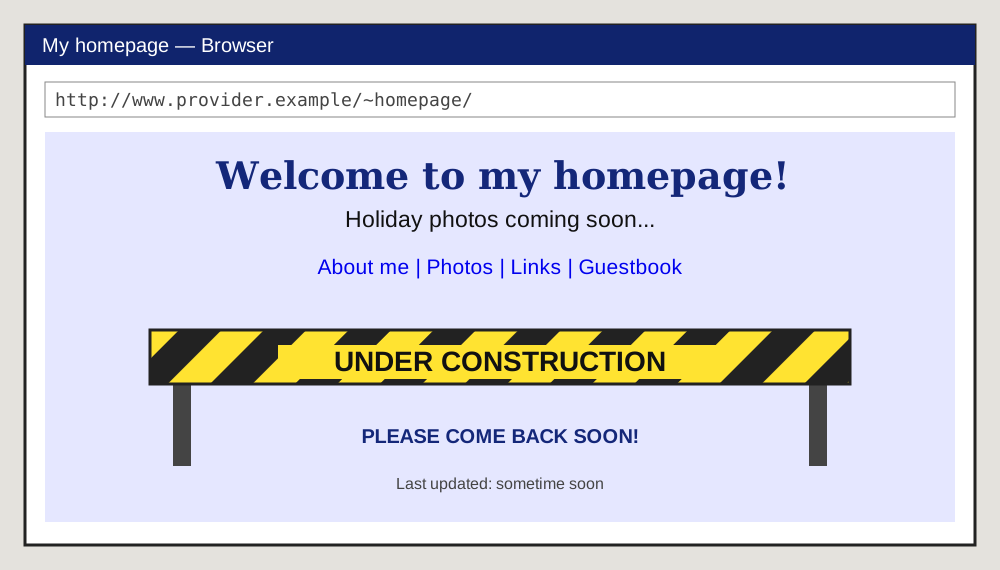
You clicked on “My hobbies” and found a construction sign. “Holiday photos” promised that the pictures would follow soon. The favourite links section was already open, but for now it contained only a link back to the homepage you had just left.
At the bottom it said: “Come back soon!”
Perhaps you did. A week later, or a month. The little figure was still digging.
A place of your own, even if it was empty
For many people, a personal homepage was their first space of their own on the internet. You could explain who you were, which music you listened to and why your favourite football club was the best. You could show off your collection or start a page about a subject that never found room in the newspaper.
You did not have to wait until everything was finished. Once you had a title, a welcome message and a background, the website could go online.
Free homepage platforms such as GeoCities became home to countless personal websites. In the Netherlands, internet users also built pages using the web space supplied by their internet provider. The address was sometimes long and difficult to remember, but that hardly mattered. You had made something that someone on the other side of the world could see.
And if there was not much to see yet, you put up a construction sign.
Why a road worker?
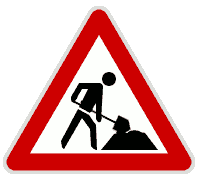
It is a curious image: announcing a digital page with tools for digging up a street. Yet everyone immediately understood what it meant.
Work is going on here. Something is coming. Please be patient.
The building site also fitted the language we used for the internet. You built a website. You had a homepage, as if you lived somewhere. GeoCities even grouped personal pages into virtual neighbourhoods. On a web like that, a barrier and a worker did not seem strange at all.
Sometimes a simple sign was enough. Other owners went further, with blinking lights, moving machinery and whole rows of warning stripes. The announcement that there was nothing here yet could take up quite a lot of space itself.

Making a few pictures move
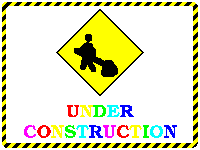
Many construction signs were animated GIF files: small images in which a few frames repeated over and over. A shovel went up and down. A light flashed on and off. The work never progressed, but the movement continued.
That was part of the appeal. A homemade page that moved could feel more impressive than one that displayed only text.
Web graphics collections offered buttons, little mailboxes and construction signs. Your own homepage could acquire the decorations you had admired on other sites. Not everyone thought about permission or copyright; something found on the web was easily reused elsewhere.
The same tireless road worker could therefore turn up on very different building sites.

The rooms first, then the furniture
Many beginner website builders had bigger plans than they could carry out at the time. The menu was already in place: “About me”, “Photos”, “Links”, “Downloads”, “Guestbook”.
The content still had to follow.
That was understandable. Making a website took time, especially if you were learning HTML along the way. An image failed to appear. A link pointed to a file on your own computer. After uploading, you discovered that a filename was misspelled.
The construction sign gave you some breathing room. Visitors could see that the empty page was not the final result. Perhaps you would work on it again next weekend.
And sometimes you really did work on it again next weekend.
“Coming soon”, with no end date
Some websites never received their promised additions. The owner lost interest, started again somewhere else or simply became too busy.
The page stayed online.
A website could spend years promising that holiday photos would be coming soon. An announcement of an imminent update slowly became a historical document itself.
That is part of what makes these pages so intriguing to revisit. They preserve what someone made, but also what someone intended to make. An empty section once had an idea behind it. Behind “more to follow” was someone who thought they would find the time.
The construction sign became a little monument to an unfinished intention.
The pleasure of building it yourself
Of course it could be irritating. You went looking for information and found a barrier. Some pages consisted almost entirely of the announcement that a real page would appear later.
Yet that imperfection was part of the pleasure of the personal web. You could see people trying out how publishing worked. A website did not have to look professional straight away to deserve a place online.
The owner was visible in the choice of colours, the awkward layout and the enthusiastic exclamation mark after “Welcome!”. The construction sign said something too: I am working on this, I have more plans, take another look later.
On many platforms today, the design is already fixed before you post anything. That makes publishing easier. With an old homepage, you also had to decide what your space would look like — and learn how to keep it standing.
The shovel keeps moving
You can still encounter those building sites in preserved personal websites. The warning light blinks. The section is empty. The worker repeats the same movement as if no time has passed since your last visit.
The promised addition probably will not arrive now.
But the sign recalls an era when a website could also be a public experiment. You put something online, discovered how it worked and carried on building while other people were already looking around.
The web felt like something everyone could help build.
And while it was unfinished, you were allowed to put a barrier in front of it.
Sources and further reading
Cameron’s World — a collage of archived GeoCities pages ↗ArchiveTeam — GeoCities ↗